
SEAGULL HEALTH
Your health,We care!
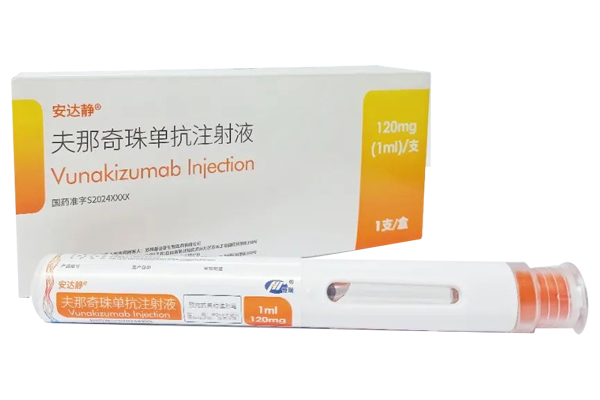
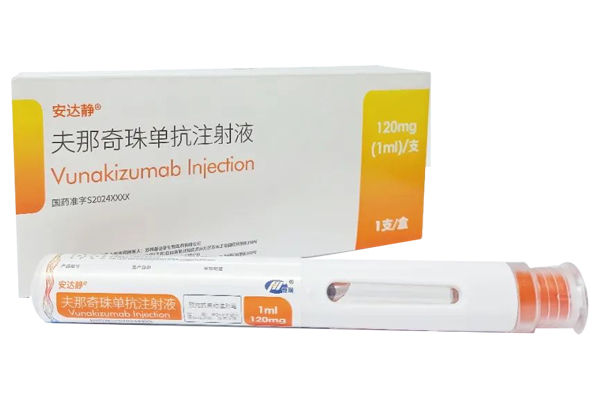
Vunakizumab Injection features prominent clinical efficacy, convenient administration with only three subcutaneous injections required during the induction phase, and a favorable overall safety profile.

 AuthenticGuaranteeFast DeliveryPrivacy
 Vunakizumab Injection exerts its effect by specifically binding to the IL-17A protein in serum and blocking its interaction with receptors, which precisely abrogates the inflammatory signaling pathway, inhibits the release of proinflammatory cytokines, suppresses the progression of immune-mediated inflammation at the source, and has been approved for two indications.
For the treatment of adult patients with moderate to severe plaque psoriasis who are suitable for systemic therapy or phototherapy.
For the treatment of adult patients with active ankylosing spondylitis who have an inadequate response to conventional therapy.
Vunakizumab Injection should be administered under the guidance and supervision of a physician experienced in the diagnosis and treatment of the relevant diseases.
Psoriasis
The recommended dose is 240 mg (administered as two 120mg injections), given subcutaneously at Weeks 0, 2 and 4, followed by administration once every 4 weeks thereafter.
Ankylosing Spondylitis
The recommended dose is 120 mg, given subcutaneously at Weeks 0, 2 and 4, followed by administration once every 4 weeks thereafter.
This product should be administered by subcutaneous injection. If possible, injection into psoriatic lesions should be avoided.
Following proper training in standard subcutaneous injection techniques, patients may self-administer this product if deemed appropriate by the physician.
Physicians should ensure appropriate follow-up and instruct patients to perform the injection in accordance with the instructions provided in the package insert of this product.
It is contraindicated in patients with severe hypersensitivity reactions to the active ingredients of this product or any of its excipients.
It is contraindicated in patients with clinically significant active infections.
During the entire 52-week treatment period, the most common adverse reactions (≥5%) included upper respiratory tract infections, injection site reactions, hyperuricemia, elevated alanine aminotransferase, hyperlipidemia, elevated blood triglycerides, elevated serum uric acid and hypertriglyceridemia. The safety profile was generally consistent with that observed at 12 weeks.
During the entire 32-week treatment period, the most common adverse reactions (≥5%) included upper respiratory tract infections, elevated alanine aminotransferase, hyperuricemia, elevated aspartate aminotransferase, oral ulcers, injection site reactions and hypertriglyceridemia. The safety profile was generally consistent with that observed at 16 weeks.
Pregnancy
There are no available study data on the use of this product in pregnant women. Animal studies have not demonstrated any direct or indirect adverse effects of this product on pregnancy, embryo/fetal development, parturition or postnatal development. However, animal reproductive studies are not always predictive of human responses, and therefore the use of Vunakizumab is best avoided during pregnancy.
Lactation
There are no data on whether this product is excreted in human milk. Since immunoglobulins can be secreted in breast milk, breastfeeding women should use this product with caution.
Fertility
The effect of this product on human fertility remains unknown.
The safety and efficacy of this product in patients under 18 years of age have not been established.
Results from population pharmacokinetic analysis have not identified a significant impact of age on pharmacokinetic (PK) parameters.
Elderly patients are recommended to use this product under the guidance of a physician.
For more detailed drug information, please consult the official package leaflet.
If any issues arise, please contact us immediately.
Email:haiousales@gmail.com
Copyright 2024 @ haiouhealth.com All right reserved SEAGULL HEALTH


